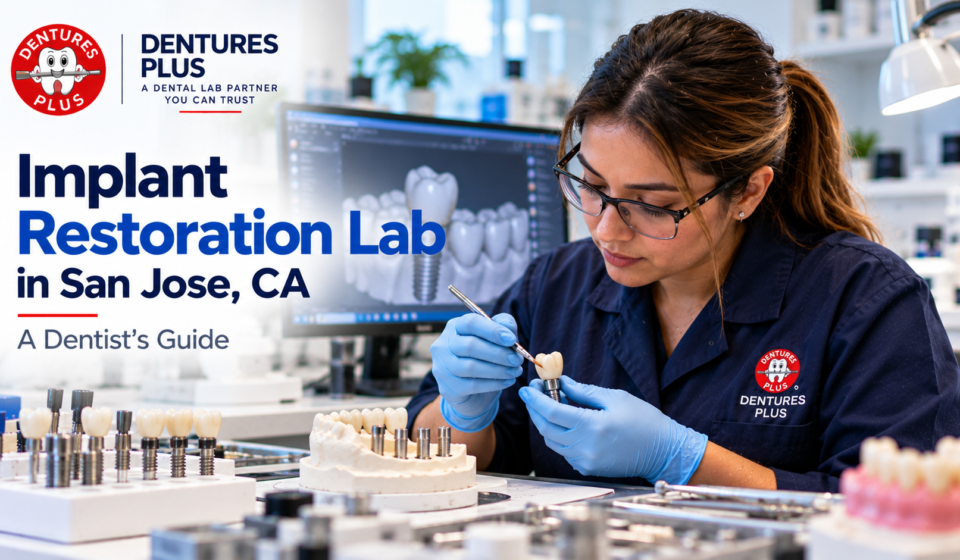

Implant-supported restorations require coordination between the dental practice and the laboratory responsible for fabrication. From reviewing implant-related information to understanding the restoration design, each case requires accurate details and clear communication.
For dentists searching for an implant restoration lab in San Jose, CA, choosing a laboratory partner involves more than finding a provider that fabricates crowns or bridges. The laboratory should understand the requirements of implant-related cases, work with the information supplied by the dental team, and communicate when clarification is needed.
This guide explains what dentists should look for when selecting an implant restoration laboratory.
What Does an Implant Restoration Lab Do?
An implant restoration laboratory works with dental professionals to fabricate restorations supported by dental implants.
Depending on the case and the laboratory’s capabilities, these restorations may include:
- Implant-supported crowns
- Implant-supported bridges
- Implant-retained or implant-supported dentures
- Other implant-related restorative solutions
The dentist is responsible for diagnosis, treatment planning, implant placement decisions, and clinical verification. The laboratory supports the restorative process by working from the dentist’s prescription, case records, and relevant implant information.
Understanding this division of responsibilities helps both teams coordinate the case more effectively.
1. Accurate Implant Information Is Essential
Implant cases can involve specific components and restorative requirements. The laboratory needs the relevant information to understand how the planned restoration should be fabricated.
Depending on the case, the dental practice may need to provide:
- The implant manufacturer and system
- Implant connection or platform information
- Appropriate component details
- Scan bodies or digital scan information, when applicable
- Impression or digital workflow details
- Restoration design instructions
- Material preferences
- Bite and occlusal information
- Shade selection and photographs when relevant
The exact requirements depend on the implant system and restoration type.
Dentists should confirm the laboratory’s submission requirements before sending a case. If important information is missing or unclear, the laboratory should communicate with the practice before proceeding.
2. Digital Workflows in Implant Dentistry
Digital dentistry has changed how many implant restoration cases are submitted to laboratories.
Depending on the clinical workflow, a dental practice may provide intraoral scans, implant scan data, and compatible digital files such as STL files. The laboratory can use supported digital information for case review and restoration design.
A digital implant workflow may involve:
- The dental practice submits the prescription and required digital records.
- The laboratory reviews the files and available case information.
- The restoration is designed using an appropriate digital workflow.
- The restoration is fabricated and finished.
- The laboratory performs relevant checks before returning the case.
Not every implant case follows the same sequence. Some cases may require traditional impressions, physical models, or additional information.
When evaluating an implant dental lab in San Jose, dentists should ask which digital systems and file formats the laboratory accepts and whether its workflow matches the practice’s current process.
3. Understanding Restoration Design and Materials
Implant-supported restorations vary according to the case, clinical requirements, and planned prosthesis.
Material selection and restoration design may depend on factors such as:
- The type of restoration
- Implant position and restorative space
- Functional and occlusal requirements
- Esthetic expectations
- Available clinical information
- The dentist’s prescription and material preferences
The laboratory should work from the instructions and records provided by the dental team rather than making assumptions about important clinical requirements.
For more complex cases, clear discussion between the dentist and laboratory can help identify questions that need to be resolved before fabrication.
4. Why Communication Matters in Implant Cases
Implant restoration cases may involve more technical details than some routine restorative cases. That makes communication between the dental practice and laboratory particularly important.
Questions may arise about component compatibility, digital scan information, restoration design, material selection, or the information required to proceed.
When choosing an implant restoration dental lab, dentists should consider whether the laboratory has a clear process for:
- Reviewing submitted case information
- Identifying missing details
- Requesting clarification
- Discussing case-specific requirements
- Communicating about workflow issues
Clear communication helps both teams understand the requirements of the case and reduces unnecessary assumptions.
5. Quality Control Before Case Delivery
Quality control is an important part of implant restoration fabrication.
Depending on the restoration and laboratory workflow, checks may include reviewing design details, finishing, component-related requirements, and other case-specific specifications.
Dentists should ask prospective laboratory partners how they review completed restorations and how potential concerns are communicated.
Laboratory checks are one part of the overall process. Clinical evaluation, verification, and final treatment decisions remain the responsibility of the treating dental professional.
6. Choosing an Implant Restoration Lab in San Jose
For dental practices in San Jose and surrounding areas, selecting a laboratory should involve an assessment of technical capabilities and professional support.
Consider the following factors when comparing laboratories.
Experience with implant restorations: Does the laboratory handle the types of implant-supported cases your practice submits?
Digital compatibility: Can it work with the scans, files, and supported workflows used by your practice?
Component information: Does the laboratory clearly communicate what implant-related information is required?
Case communication: Is there a process for addressing questions before fabrication continues?
Quality control: Does the laboratory have defined review procedures for completed cases?
Workflow compatibility: Can its submission process fit the practice’s needs?
A local laboratory may offer the convenience of a nearby professional relationship, but location alone should not determine the decision. Dentists should evaluate the laboratory’s services, communication, and technical capabilities together.
7. Questions to Ask Before Sending an Implant Case
Before choosing a laboratory partner, dental practices may want to ask:
- What types of implant-supported restorations do you fabricate?
- What implant system information do you require?
- Which digital scan formats do you accept?
- Do you support traditional impression workflows?
- What components or records should accompany the case?
- How do you handle missing or unclear case information?
- What quality-control steps are included?
- How does your team communicate about complex cases?
- What information should our practice include with each prescription?
- Can your workflow accommodate our practice’s needs?
These questions help dentists evaluate whether a laboratory is an appropriate partner for their restorative workflow.
8. Implant Restoration Services at Dentures Plus
Dentures Plus is a dental laboratory in San Jose, California, serving dentists and dental clinics with restorative laboratory services.
Its service range includes implant restorations, crowns and bridges, dentures and partials, veneers, dental appliances, and digital dental workflows.
For implant-related cases, the dental practice and laboratory need to work from appropriate case information and communicate when additional details are required. Dentists should confirm the specific implant systems, components, and workflows supported by the laboratory before submitting a case.
Dentures Plus aims to support dental professionals with laboratory services, case communication, and workflows suited to their restorative needs.
Dental professionals can visit the Dentures Plus website to learn more about its laboratory services.
Final Thoughts
Choosing an implant restoration lab in San Jose, CA, requires careful consideration of laboratory experience, digital capabilities, component information, case communication, and quality-control processes.
Implant-supported restorations depend on coordination between the clinical team and the laboratory. Clear prescriptions, appropriate case records, and timely communication help both teams understand the requirements of each case.
For dentists, selecting a laboratory partner whose services and workflow fit their practice can support a more organized approach to implant restoration cases.
Frequently Asked Questions
What should dentists look for in an implant restoration lab in San Jose?
Dentists should consider experience with implant-supported restorations, digital capabilities, component-related requirements, case communication, quality-control procedures, and compatibility with their practice workflow.
What information does a dental lab need for an implant restoration?
Depending on the case, the laboratory may require implant system details, component information, a prescription, digital scans or impressions, bite records, shade information, and restoration design instructions.
Do implant restoration labs accept digital scans?
Many laboratories support digital implant workflows, but accepted scanners, file formats, and submission requirements vary. Dentists should confirm compatibility with their chosen laboratory.
Why is communication important in implant restoration cases?
Clear communication helps the laboratory understand the dentist’s requirements and identify missing information or questions before fabrication proceeds.
Does Dentures Plus provide implant restoration services?
Yes. Dentures Plus lists implant restorations among its laboratory services for dentists and dental clinics. Practices should confirm the specific case requirements and supported workflows directly with the laboratory.